|
|
|
|
|
|
SKILLED NURSING CARE FACILITY
|
|
Maybe this patient came from home, but at this time there is either no one there to help care for them now, or their family/friends are unable to support the care that they are requiring. This is called "lacking a safe discharge plan." It can also be termed "administrative days." Medicare does not reimburse the hospital for administrative days unless there is also a medical necessity for the patient to remain inpatient. This creates an urgency for the patient to find placement.
|
The hospital case managers/social workers will begin assessing if the patient qualifies for Medicaid. This takes time and resources; two things that are hard to come by.
|
|
The patient can be denied care in a Medicaid facility for any of the following reasons:
|
|
- Being homeless without needed paperwork
- Possessing an asset even slightly over the limit
- The lack of an address to receive agency documents (an effect of homelessness)
- The level of care needs they have within a Medicaid facility (i.e. end-of-life care needs)
- The Medicaid facility sometimes chooses profitability over bed availability (this pertains to the reimbursement structure between hospice and Medicaid)
- And so on....
|
but, let's say the patient has Medicare..... Medicare will reimburse hospice agencies 100% for care, however, they do not supplement the costs for room and board. These costs must be paid out of pocket by the patient. When the hospital sees that the patient has Medicare Part A, they can be placed into a Skilled Nursing Facility on a rehabilitation plan, though they ought to be placed in a loving home to rest in their final days. This may shock you, or you may have encountered loved ones in this same predicament and did not realize what was actually taking place. If you fall into the latter, this is not meant to be insensitive to your experience or diminish the gut-wrenching decisions that families are faced with when it comes to placement and care of their loved ones.
|
|
These situations place people between a rock and a hard place and peace is hard to come by.
|
|
We encounter this situation often! Sadly, it usually comes our way via the skilled care facility or hospice agency making the referral for a patient who was placed in rehab, but did not belong there. It amazes me how a person can be accepted into SNF to undergo physical therapy when they are too weak to even lift a finger. There is also a false sense of hope presented to the patient/family once a physician begins talking about rehabilitation rather than end-of-life care. It also adds a massive amount of confusion. Many times the patient is excluded from these conversations, or lacks the capacity to make the decision for themselves; either way, autonomy is far removed and decisions are made out of desperation instead of with dignity. There is an increased level of difficulty to get them transferred to us at that point and oftentimes, if the SNF can get the person's Medicare reimbursement extended, they will do everything to keep them.
|
|
In a perfect world we would be able to plug this pipeline. Instead of placing patients who need dignified end-of-life care into skilled rehab, they can be placed in a home like Heart of Mary House, where their final weeks and months will be met with comfort and peace; not angst and disorder.
|
|
|
|
|
-Meet Birdie-
|
|
|
Birdie was 101 years old when she came to us at HOMH. She was someone who was enrolled in Medicare, but she did not qualify for Medicaid. She had one child, who was her caregiver, but the ‘child’ (Rose) was 80 years old and had medical conditions of her own.
|
|
Birdie had been referred to hospice after she landed in the hospital due to multiple falls, a broken hip and dementia. At the time of her discharge, she was requiring 24/7 care and was completely dependent on her aging daughter. Ultimately, she lacked a safe discharge plan.
|
|
|
|
This scenario occurs countless times each day in hospitals across the country. The discharge team has their hands tied on the appropriate placement and even though the patient has already been assessed as terminal and in need of hospice, the fact that they have Medicare, opens the door for the patient/family to be financially steered into a rehab/skilled nursing facility (SNF) admission. This is exactly what happened to Birdie and her daughter.
|
Rehab? Why would Birdie need rehab? Was the goal to improve her function? Is that what they told Rose to ease concerns about an admission into a nursing home and rehab, even though she had already been told she was terminal and declining?
|
The fact is, when this becomes the discharge plan, it is due to payment structure, and not the wholeness of the patient’s needs. The design of Medicare drives the behavior of this unfortunate scenario.
|
Even though Birdie was physically declining and had been referred to hospice, the hospital was satisfied because it met the discharge requirements of safety and there was nowhere else to send her anyway. The SNF took no issue with this because to them, it’s reimbursable and the room and board will be covered.
|
|
For your awareness---when a patient is admitted into a skilled nursing facility:
|
|
Rehab = Medicare covers room & board costs
|
Hospice = Medicare does not cover room & board costs
|
|
Birdie was admitted to the SNF and within 4 hours, Rose had her back at the hospital. She never even made it to her first physical therapy session.
|
She was sent to a floor with twenty-nine other patients and one nurse. There was a shortage of CNA’s and there were only two assigned to the floor. After they arrived, a CNA had entered Birdie's room and informed them that the nurse would be in when she could and that they were “understaffed.” An hour went by and Rose was beginning to ask with concern when the nurse would be in.
|
After the nurse finally arrived, Rose expressed her concern for the lack of staff and that her mother was at a high risk for falls. In a fit, the nurse lowered the bed to the lowest level, threw a mat on the floor and said, "that was all she could do, and that she was too busy.”
|
Rose quickly realized that the needs of her mother would not be met in the facility, especially the emotional support Birdie was needing at the time. She also realized that she, herself, would not be supported with resources or decision making needs pertaining to her mother. There would not be the presence of a loving person, a hand to hold, or a calm voice responding to Birdie's needs when Rose couldn't be present.
|
|
Rose did the only thing she knew to do, which was to have Birdie sent back to the hospital.
|
|
For Birdie, this ended up being a blessing, because we happened to have a bed available, and the case manager knew to call us with the referral. Birdie came to us the very next day.
|
|
Patients like Birdie should have a care plan that is centered around comfort, dignity, and preparation for death. Instead they get:
|
|
Therapy they cannot tolerate
|
|
Late hospice enrollment (if at all)
|
|
We desire to interrupt this lack of dignity pipeline!
|
|
Rose was so relived once Birdie got settled in at HOMH. Understandably, she was a bit traumatized, and even though she knew her mom was now in a safe, loving, place, she had great hesitations when it came to facing that her mom was terminal and at the end of her life.
|
She had spent 80 years with her mother and loved her tremendously!! Handing over care to us, was an enormous act of faith for Rose.
|
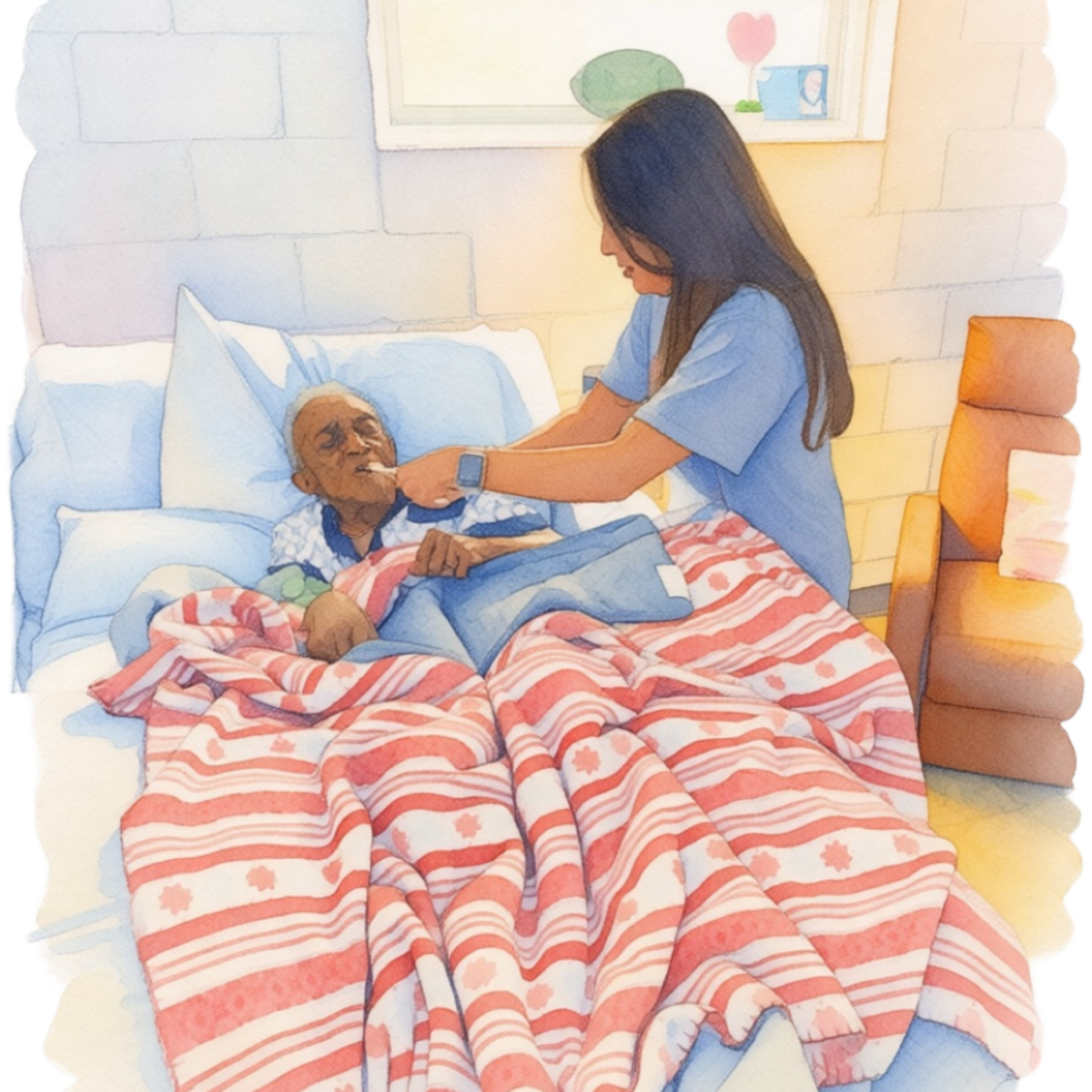
Birdie wasn't with us for very long. Her care was a little more challenging than others we have cared for. For the sake of her dignity, I will not disclose too much, but understand that her nights were spent in anguish and all our caregivers could do was to remain by her side in constant prayer and be presence of peace.
|
|
This portion of the story was retold to me by our caregiver on duty at the time--
|
|
Birdie had been pretty restless throughout the day and night, but something had changed and as the caregiver was sitting with her and praying, she knew she would be passing soon.
|
It is not uncommon for people to resist death during this time... especially the more controlling, matriarch types of people. Birdie had also spent 80 years of her life with Rose, and leaving her proved to be painstakingly difficult for them both.
|
|
Rose could not bear to be with Birdie when she passed. She also feared that her heart conditions could not handle the emotional stress. Our caregiver shared that it was as if the Holy Spirit came to her while she was praying to tell her to make a facetime call to Rose at that very moment.
|
In the call, Rose expressed her love for Birdie and for the first time told her, "that she would be okay and that she could leave this world in peace, now!"
|
|
Even though she had been struggling for several days and even more so, the last 24 hours, the moment Rose said these words to her, she was calm and her spirit left her body within moments, in peace.
|
|
As she laid there, the caregiver shared a witness of Birdie's face glowing with the most beautiful light.
|
|
.............................................
|
|
God's love for Birdie and Rose was poured out in endless graces and we were privileged to witness the power of what happens when we surrender to His Will and trust in His Love!
|
|
|
|
|
|
|
|
|
|
|
|
|
|
|